Best Books and Tips for New or Aspiring Therapists
Originally published May 2026


If you're just starting out or wondering what kind of therapist you want to be, these are the books I'd hand you as a Therapist Mentor and Business Coach.
This is the list of books that shaped me as a therapist.
The books that changed how I think about people, about suffering, about what it even means to sit with someone in pain.
Some of them are clinical. Some of them are thought-provoking. Some of them cracked my heart open in the best way.
List of must-read books for new therapists, counselors and mental health professionals:
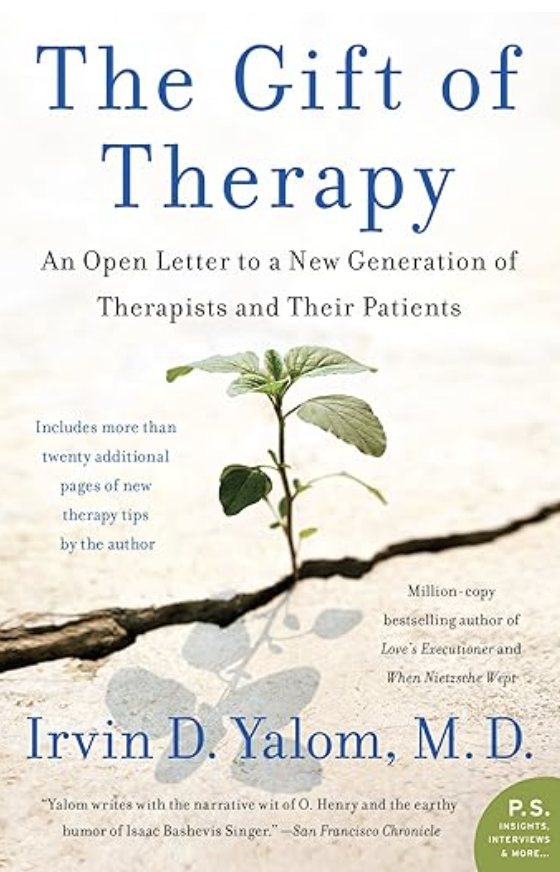
Book: The Gift of Therapy by Irvin Yalom
Yalom writes about therapy the way someone talks about a career they've spent a lifetime loving. This book is honest, relational, and deeply human.
Takeaway tips for new therapists:
When I graduated, three different people gave me this book independently, and every single one of them was someone I really respected as a therapist. That’s not a coincidence. That’s the field quietly passing something important down to you.
Yalom writes about therapy the way someone talks about a career they’ve spent a lifetime loving. It’s not a manual or a framework. It’s honest, warm, and deeply human in a way that most clinical texts just aren’t. What stayed with me most is this: good therapy isn’t about having the right answer or your perfectly timed intervention. It’s about being genuinely present with another person, which sounds simple until you’re sitting across from someone in real pain and you realize how hard it actually is to just stay there without fixing, redirecting, or filling the silence.
Read this before your first session and then again after your first year, because it will mean something completely different both times.
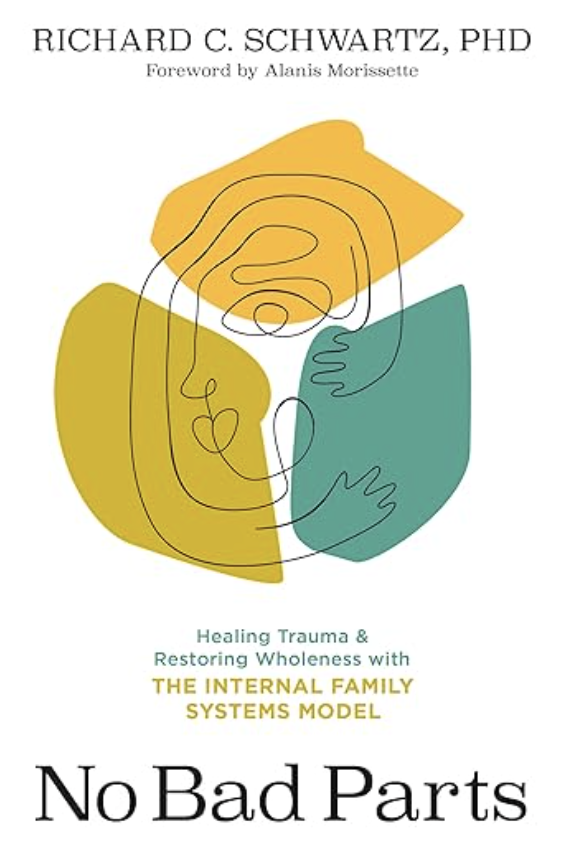
Book: No Bad Parts by Richard Schwartz
If you've ever worked with IFS or been curious about it, this is your starting point. Schwartz's core idea that every part of us, even the ones we hate, are trying to help us completely changed how I approach my clients and myself.
Takeaway tips for new therapists:
This one lives in my office, not on a shelf but actually in the room with me every single session. Schwartz’s core idea is that every part of us, even the parts we hate and the ones that show up and wreck things, is actually trying to help in the only way it knows how. Nothing is just broken and nothing is just bad.
That reframe completely changed how I listen, because I stopped hearing my clients more difficult parts as problems to manage and started getting curious about what those parts were protecting. Before I could do that for clients though, I had to do it for myself first. Shoutout to therapy for being there for me too!
My own inner critic didn’t disappear, but once I stopped fighting it and got curious about what it was actually afraid of, something real shifted in how I work and live. Even if you never formally practice IFS, this lens will get into you and quietly change how you hear everything your clients bring in.
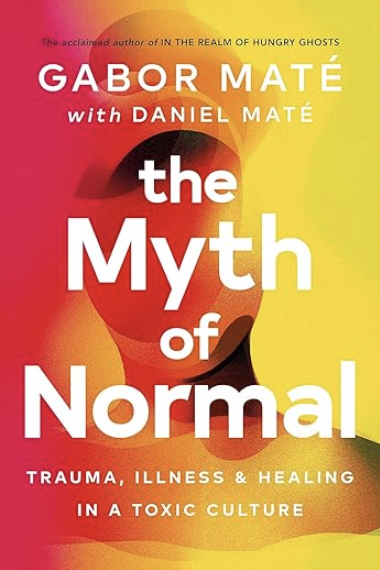
Book: The Myth of Normal by Gabor Maté:
A sweeping, compassionate look at how our culture creates suffering and calls it individual dysfunction.
Takeaway tips for new therapists:
I thought I understood trauma before I read this book because I had the training and I knew the stuff and was informed etc etc. Then after I heard Maté on a podcast, I picked up this book. This helped me understand how much of what walks into my office isn’t a disorder at all but a completely reasonable response to an unreasonable set of conditions. Our culture creates suffering and then turns around and diagnoses it as individual dysfunction, and once you see that pattern clearly, you really can’t unsee it.
This book deepened my understanding of trauma, the body, and the systems that shape us. It changed how much I pathologize versus how much I contextualize, and it shifted how I hold my clients (hint: it’s even more gentle than you think). If you’ve ever felt quietly uneasy about how the DSM works, this book will give that unease a name and a framework.
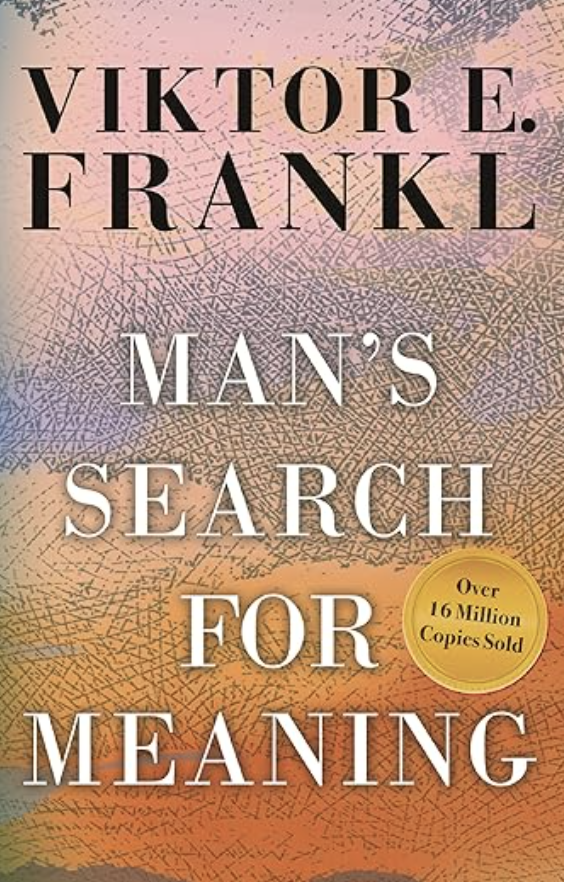
Book: Man's Search for Meaning by Viktor Frankl:
This one isn't a therapy book in the traditional sense. It's a memoir and a philosophy. But Frankl's ideas about meaning, suffering, and human agency have sat with me since the first time I read it.
Takeaway tips for new therapists:
This isn’t technically a therapy book since it’s really a memoir and philosophical. It was written after Frankl survived a concentration camp. What he came out with is a theory of making meanin when things feel nearly impossible. Wha he writes is both devastating in its origins and genuinely hopeful in what it offers to the rest of us.
I’ve given this one to more clients than anything else on this list, but what it gave me as a clinician was a way to sit with people in real despair without flinching or rushing to resolve it. When someone is asking “what’s the point?” in your office, Frankl doesn’t hand you a tidy answer to give them. He shows you that the question itself is where the work actually lives, and that “sitting in the hurt”, is one of the most important things you can do for humanness and survival.
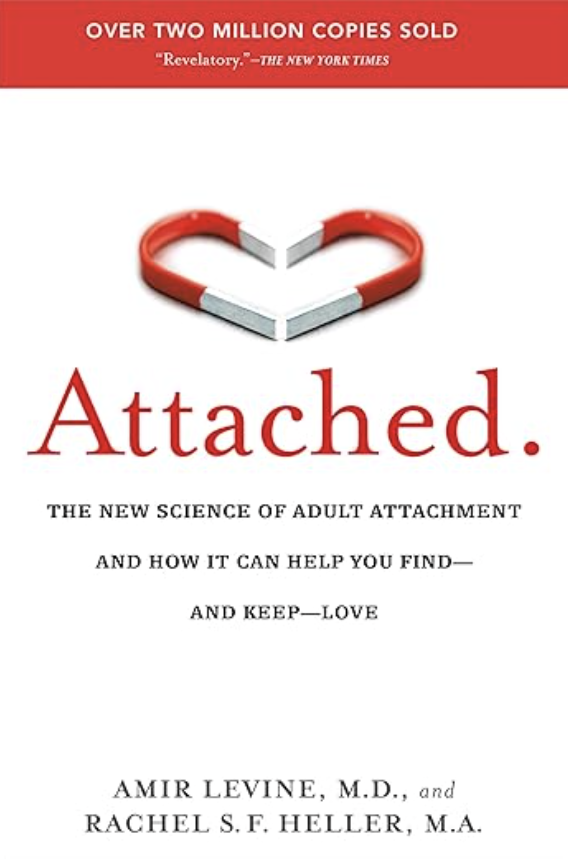
Book: Attached by Amir Levine & Rachel Heller:
Attachment theory made readable. This book gave me a language for so much of what I see in session and, honestly, in my own relationships too.
Takeaway tips for new therapists:
This is attachment theory explained simply. The book gave me a language for so much of what I hear in session and, honestly, for patterns I recognized in my own relationships before I fully understood what I was looking at.
As a relational therapist, attachment is one of my jams and something about the way Levine and Heller frame it ,makes it click differently than the academic texts do.
For newer therapists, this is a genuinely useful shortcut to understanding the patterns you will keep seeing with clients who often don’t have any words yet for what they’re caught inside of.
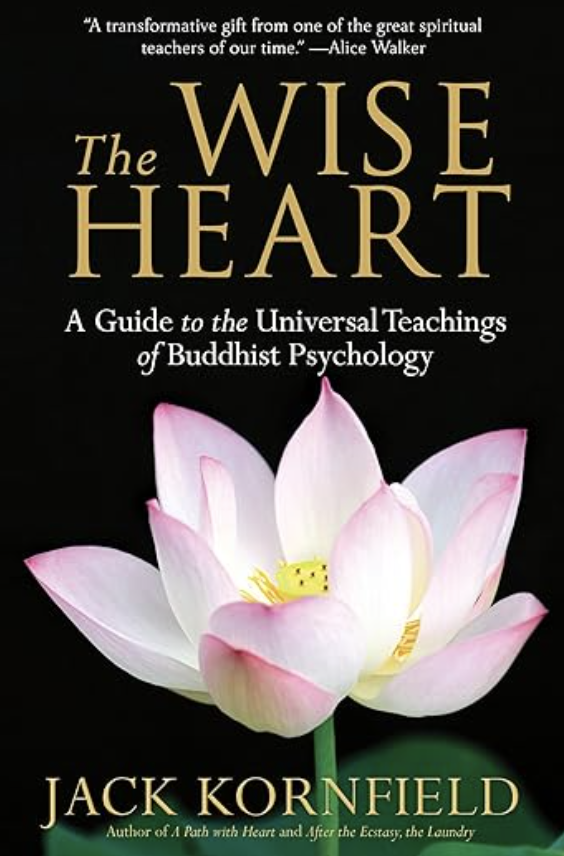
Book: The Wise Heart by Jack Kornfield:
This one is quieter than the others but it stayed with me. Kornfield blends Buddhist psychology with Western therapy in a way that feels genuinely wise rather than trendy.
Takeaway tips for new therapists:
I was recommended this book by my mom at an early stage in grad school. She recommended it when I was doing an internship that felt really heavy. I was starting to feel the intensity of the work in a way my training in a class hadn’t really prepared me for, because even if you are warned, sitting with pain all day is something that requires a lot of practice, skill and tears. It’s heavy. . .
Kornfield mixes Buddhist psychology with Western therapy in a way that feels genuinely wise, and what it gave me was a more spacious way to hold my own experience as a practitioner. The hard sessions, the self-doubt, the moments where work follows you home. You don’t need to identify as Buddhist for any of this to land because it’s really about learning to be with your own experience more gently and with more room. This one is a slow burn, so give it the time it needs to work.
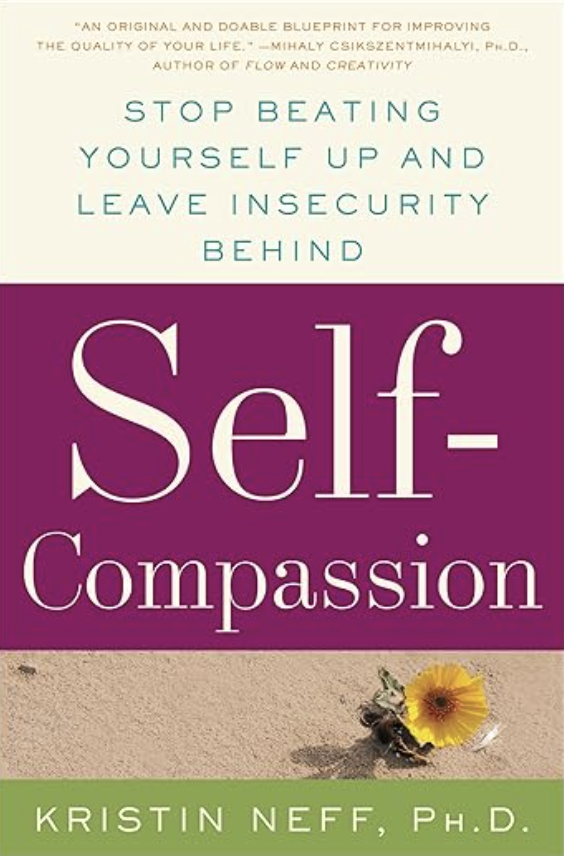
Book: Self-Compassion by Kristin Neff:
You cannot pour from an empty cup. Of course you've heard that. But Neff actually gives you a framework for what self-compassion looks like in practice, not just as a concept that everyone throws around.
Takeaway tips for new therapists:
This book changed my life. I don’t say that lightly and I don’t say it about many books, but this one genuinely altered something in me, both as a person and as a practitioner.
It is incredibly useful clinically. But what happened was that I started reading it for “work” and realized pretty quickly that I was the one who needed it. New therapists especially tend to carry this quiet, relentless pressure, picking apart every session, replaying what they should have said, measuring themselves against some impossibly competent version of a therapist that doesn’t actually exist. Neff gave me a way out of that loop that wasn’t just “be nicer to yourself,” because that never works. She actually shows you how, with research behind it and a framework you can return to when things get hard.
The three components she writes about, self-kindness, common humanity, and mindfulness, sound straightforward until you start actually trying to practice them and realize how much of your default setting runs in the opposite direction. The common humanity piece in particular hit me hard, this idea that suffering and imperfection aren’t signs that something has gone uniquely wrong with you but are just part of what it means to be human. That reframe did something to my relationship with my own hard moments that years of other reading hadn’t quite touched.
What I didn’t expect was how much it changed what happens in the room. When I stopped spending so much energy being my own harshest critic mid-session, I had so much more of myself available to actually be present with my clients. The work got deeper because I got quieter inside. And now it’s woven into how I practice, how I talk to clients about their own self-criticism, and honestly how I move through my life outside of work too. It is foundational for me in a way that is hard to fully explain but very easy to feel. If you ask my clients my most used phrases are “that’s so human of you” or “be gentle with yourself” both stemming from the idea of self compassion.
The best books for new therapists don’t just teach you “what” to do – they teach you “how” you want to be in the room.
You're going to read a lot of books in this field. And a lot of them will teach you what to do. These books taught me how to be me as a therapist.
The best therapists I know aren't the ones with the most techniques. They're the ones who have done their own work, who understand suffering from the inside, and who show up with genuine curiosity and warmth. These books will help you get there.
Pick one. Start there. And be patient with yourself. Becoming a therapist is a long game.
Looking for more support? If you’re an aspiring or new therapist looking for a mentor, explore business coaching options below:

New around here? Hi. I’m Maddie, licensed therapist and fellow human.
Through Individual Therapy and digital worksheets and resources I help people (like you) release unhelpful narratives from your past, rewire your mindset with self-compassion, acceptance, and understanding, and step into your most authentic self. I’d love to connect more with you. Ready?